December 23, 2025 | DESIGN & INTERIORS
INSIDE a REPULSE BAY DUPLEX
words YUZU Editorial
photos Courtesy of Clement C Studio
production Karine Monié
Set above Repulse Bay, this duplex apartment in Hong Kong unfolds as a quiet study in balance, tactility and flow. Designed by Clement C Studio, the project approaches domestic space as a sequence of carefully calibrated moments—softened edges, layered surfaces and deliberate pauses.


The apartment looks out toward the crescent-shaped shoreline of Repulse Bay, framed by mountain views that shift with the day’s light. Inside, the atmosphere mirrors its setting: calm, continuous and subtly sculptural. Completed in just two months, the interior relies on restraint rather than excess, allowing material choices and spatial transitions to define the experience.
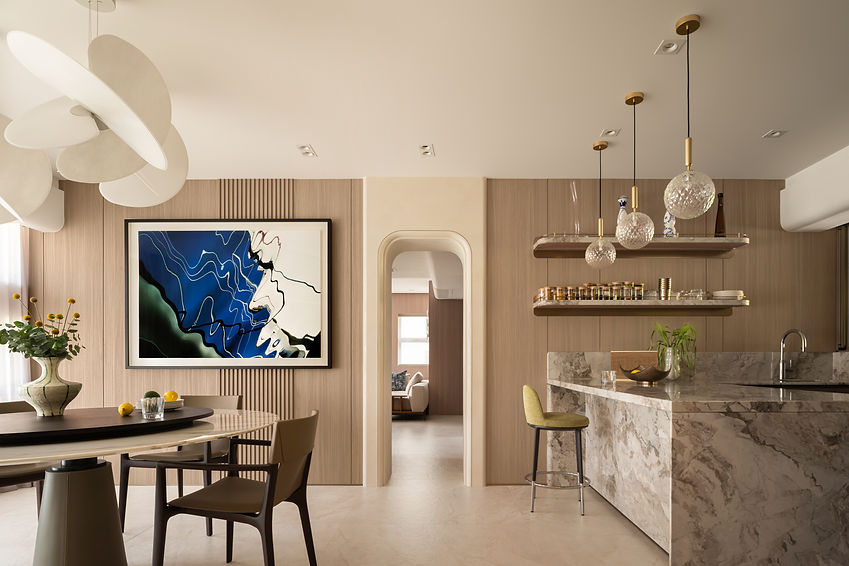
Movement through the home is shaped by rounded corners and flowing wall panels that soften thresholds and slow the pace. Staircase landings and corridor edges are treated as moments of pause, while an archway between the living and dining areas opens the main structural wall. The staircase itself becomes a sculptural transition between the social spaces below and the private quarters above.
Materiality underpins this sense of continuity. Marble surfaces, textured wall finishes and sculptural lighting establish a calm rhythm, while generous wall planes host restrained, zen-like artworks. Detailing in the paneling and stair construction adds subtle depth without visual excess.
The palette moves between taupe, grey and bronze—muted tones that bring warmth to a contemporary framework. Texture paint is used extensively, catching and diffusing light throughout the day. In the bathrooms, full-body travertine basins introduce an artisanal weight, their organic forms echoing the apartment’s softened geometry.


Across panels and furniture, wood-grain film is used for its durability and consistency. Common in Japanese residential and hospitality interiors, it resists humidity and UV exposure while maintaining a natural appearance, contributing to the home’s calm visual continuity.
Lighting is treated as a spatial tool rather than an accent. A sculptural pendant anchors the main living area, while smaller fixtures trace circulation routes, casting gentle shadows across textured surfaces and enhancing depth without disrupting the overall quiet.
Rather than pursuing drama, this interior finds its strength in measured decisions and tactile clarity. Architecture, material and light work quietly together, shaping a contemporary domestic environment defined by flow, restraint and calm.


