June 13, 2026 | vol 18
KAMILA SOLARZ
words Onur Baştürk
artworks Kamila Solarz
Kamila Solarz’s practice is defined by observation, restraint, and a quiet attentiveness to space and time. Moving between analog and digital formats, she treats photography as a deliberate act, guided by light, material, and the intervals between things. Her images are precise yet open—pared back but tactile—inviting stillness rather than spectacle.


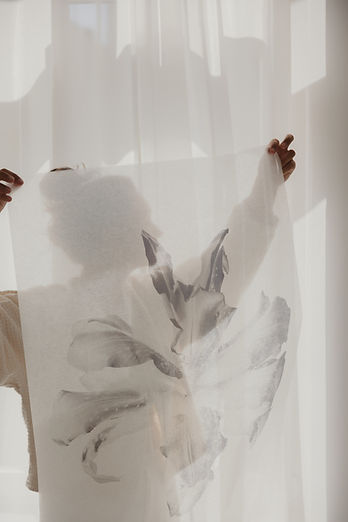
Her recent project Cycles marked a turning point in her personal work. Presented last year as a solo exhibition in Barcelona, the series considered transformation not as a linear path, but as a continuous, circular state.
Solarz speaks of working between mediums and letting photography move beyond representation—becoming a quiet field for looking and listening, where nature and material reveal themselves on their own terms.
BETWEEN MEDITERRANEAN FLOW AND NORTHERN STILLNESS
Your life and practice unfold between Mediterranean culture and Polish roots. How do these two worlds—one defined by openness and flow, the other by quiet and depth—shape you and your work today?
For a few years, I felt in between Poland and Spain. Not only physically, as I was travelling a lot between the two countries, but emotionally as well. I now say more often—and more confidently—that I’m based in Barcelona, but it has been a transition and a process. I think many people can relate to that feeling: one place no longer feels like home, and the other not quite yet.
Mediterranean culture has healed me in many ways. It opened me, allowed things that were stuck and waiting for permission to finally flow. At the same time, I carry something from my roots—a certain inner silence, but also strength. A tendency to observe, to go into the deepest layers of things, a kind of reflectiveness. The clear rhythm of seasons in Poland often comes back to me when I need a reminder that everything in nature falls and is reborn.
Nature in both places feels unique and very different. In Spain, there is vitality and lightness. In Poland, silence and intimacy. Both inspire me deeply.
ANALOG SLOWS ME DOWN
You move fluidly between analog and digital formats. How would you describe the essence of your photographic approach today?
It is very process-focused. I’m interested in observing how things take form. From that place, Cycles was born, opening a new chapter in my personal work and allowing me to explore photography as matter. Another important part of my practice is capturing the stories behind artists’ creations—through studio visits, searching for the soul of spaces and the presence enclosed in objects. I like to mix analog and digital during a single shoot, switching between them, as each medium offers a different perspective.
Analog slows me down. It makes me respect each frame, but it also leaves less room for experimentation. Digital, on the other hand, allows more spontaneity—sometimes less careful, but often more playful and daring through that openness.
OBSERVER AND OBSERVED
Flowers, textures, and natural cycles recur throughout your work. How do you define yourself as an artist today? What feels most present in your practice right now?
What feels most present for me is navigating between being the observer and the observed. When I photograph other people’s creations—whether objects, spaces, or experiences—I become a quiet observer. Most of all, I listen. In my personal practice, I open space for being seen. I explore where the boundary lies between process and result, and photography as a medium that can become matter for creating an object, not only an image.
I SPEND A LOT OF TIME IN MY INNER WORLD
There is a meditative quality to your images. How does this sensibility connect to your personal inner world?
I spend a lot of time in my inner world. I’m drawn to layers, to what lies beneath the surface. It’s interesting because my images often convey peace, while I don’t really see myself as particularly stoic. In my actions, I’m quite dynamic—I change spaces easily, make decisions quickly. My mind is always moving, driven by a desire to discover and to scratch beneath the surface. I’ve been learning, and am still learning, how to tame that impulse in favour of calm. Photography is where that calm exists. It’s there that I find it—and it finds me.


THE ORIGINS OF CYCLES
Cycles begins in spring, yet its roots extend much further back. What first sparked the project?
It’s difficult to trace a clear beginning—and in the same way, an ending. From a future perspective, it may all still be part of the process. But when I think of the elements that shaped Cycles—flowers, textures, transparency, layering, Japanese papers—flowers were there from the start. They have always fascinated me. I see them as beauty in constant motion, fluid and ever-changing. In the project, they reflect the circular movements found in nature and became a way of thinking about transformation. The intention behind exploring cycles as something continuous and circular crystallised after a journey I took to India last year.
PATIENCE, RHYTHM, AND LETTING GO
Following the transformation of a single flower over days or weeks requires patience and surrender. What did that process reveal to you?
It was about returning every day to see what had changed. Simply observing. At first, I would arrive with an idea—choosing flowers whose form I loved and imagining how they might transform. Many of them, perhaps to teach me something, never opened. I’m grateful to have observed each process. Every flower had its own rhythm and character. In the series, we see ten flowers, but I photographed around thirty species. The selection was very personal—I developed a real relationship with them. The intention was to show different transformations, energies, and rhythms, so each could be recognised as an individual organic presence. I also became calmer. That had already begun after my journey, but spending so much time with the flowers taught me deeply about the nature of process and its cyclical essence.
MY JOURNEY TO INDIA AND CONTINUOUS TRANSFORMATION
You’ve described India as a moment of inner shift. What changed for you during that time?
My journey to India gave me a profound understanding of transformation as something continuous and circular. Life and death existed side by side there. Death wasn’t a taboo, but something obvious. I witnessed rituals at the ghats, where bodies were cremated in the open air, visible to everyone. Covered with flowers, everything slowly became one matter. What remained was carried by animals or taken by the river. On my last day, I met a man who rebuilt his small café every year after the river flooded it. He told me calmly, “We try to complete life, but life is never complete.”
It was the first long journey I took alone. One of my intentions was to allow myself to be seen, as I had always felt comfortable being the observer. India places you on the other side without warning. You experience what it means to be different and visible. You can’t disappear into quiet observation. I met people, listened to their stories, and felt they were shifting something in me as well. Very quickly, I understood that the journey wasn’t about what could be seen, but about constant becoming—about perceiving through the act of seeing. It was never just one thing. I don’t think it ever is.
LOOKING AHEAD
Are there new directions or themes you’re currently exploring?
Nature remains an inexhaustible source of inspiration. When I discovered Japanese papers—organic, delicate yet strong—I fell in love. There is so much to explore, including the processes and the artisans behind them. I would love to travel to Japan and photograph paper-making processes, and to continue exploring larger formats. I’m interested in the relationship between inner cycles and those in nature, both individual and collective. This year, I want to deepen my exploration of transformation and photography as object.
After Cycles, how do you feel your visual language evolving?
Definitely—one that allows more space for exploration. My aim now is to enter something uncertain, something that may still be unresolved when I decide to leave it. I go there to discover, not to know. I’m not searching for a physical form for an idea. I explore theme and matter together, allowing the process to shape the result—sometimes letting the result become part of the process. I’ve learned that certain things take time and unfold in their own rhythm.
What daily rituals or quiet routines nourish you?
Coming back to the senses. When my mind feels cluttered, I try to do just one thing at a time: walk, play with my dog, look at the sky, feel the texture of what I’m eating, notice the letters that make up words, listen to a song. Simple things—yet often difficult in daily life. Changing scales, shifting perspectives, challenging the mind with its opposite. Most of these moments happen internally, by returning to a space of attention.
And the sea. It’s always my point of return. Water gives me a peace I can always come back to—yet it is always different.


